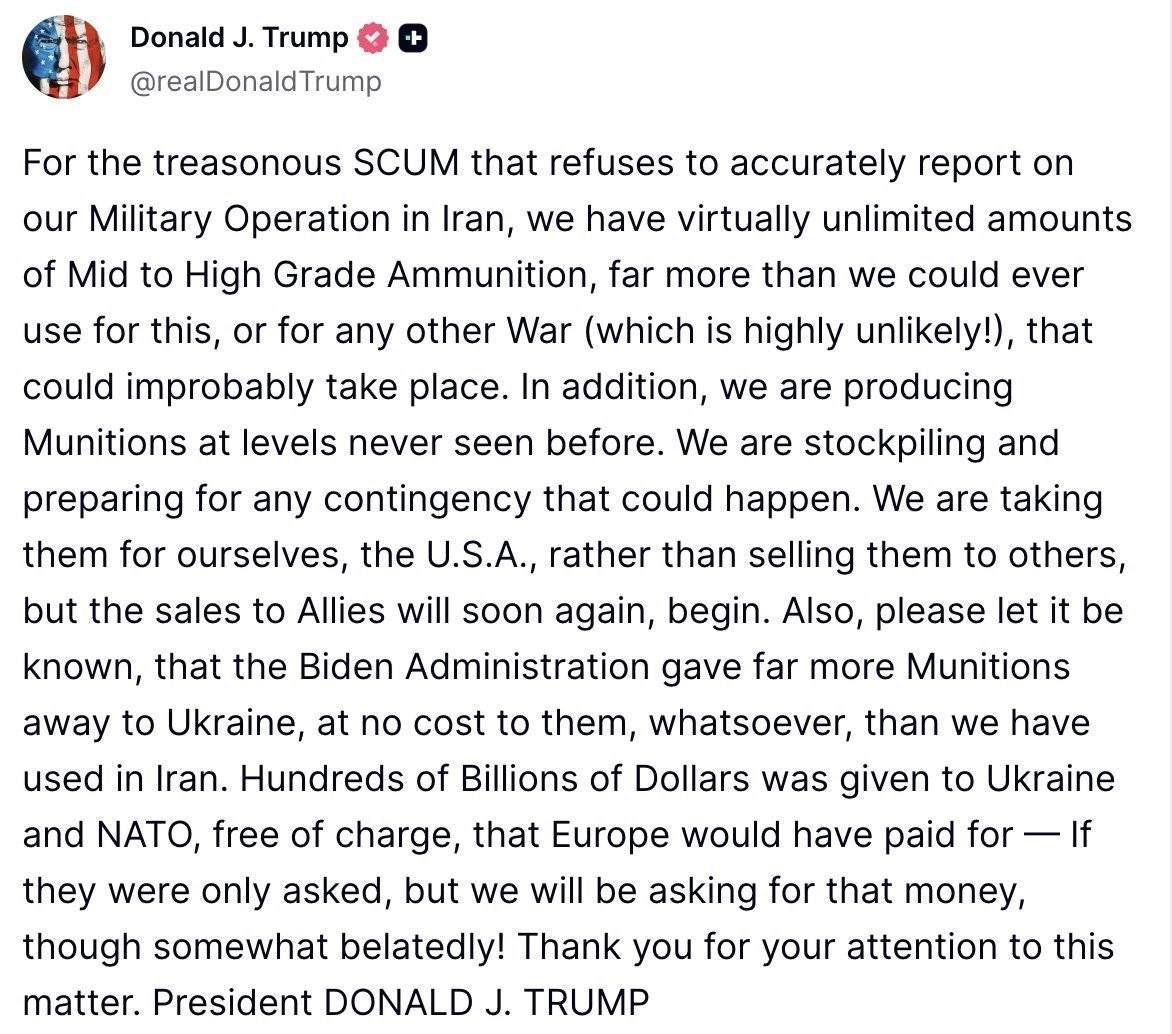
U.S. President Donald Trump, speaking publicly this week, declared that the United States will demand that European nations return the funds spent on military assistance to Ukraine during the Joe Biden administration. Trump described the amount as "hundreds of billions of dollars," insisting that Europe should have covered these costs on its own.
The statement comes amid growing pressure from Washington on its allies to share the financial burden of supporting Ukraine in its war against Russian aggression. Trump accused the previous administration of providing aid "for free," leaving the expense to European taxpayers.
What Happened
Trump announced that the United States intends to request repayment from European countries for ammunition, weapons and other military equipment supplied to Ukraine under the aid program launched during the Biden era. While the exact figure was not disclosed, the president emphasized that the sum runs into "hundreds of billions of dollars." In his view, Europe should have financed these expenditures from its own budgets rather than relying on U.S. subsidies.
Context
Since Russia's full‑scale invasion of Ukraine in 2022, Western nations—including the United States and EU member states—have provided Kyiv with more than $50 billion in military aid and substantial ammunition stocks. Trump, who led the United States from 2016 to 2020, has repeatedly criticized the large financial commitments tied to Ukraine support, arguing they undermine the interests of the American public.
What Is Known Now
To date, no official documents have been released that detail the precise amount the United States would seek to recover. European leaders have not yet commented on Trump’s remarks, but diplomatic circles warn that such demands could strain already tense transatlantic relations. Analysts note that attempts to shift the cost burden onto Europe may encounter political resistance in EU countries where public opinion is already wary of additional spending.
Possible Consequences
If the United States proceeds with a formal repayment request, it could trigger a reassessment of future military aid packages and increase friction within the NATO‑EU partnership. European governments may demand clearer guarantees and compensation mechanisms, complicating the coordination of new support packages for Kyiv. Moreover, the rhetoric could deepen internal polarization in the United States, where Trump supporters use it to argue for limiting foreign expenditures.
At present, the exact implementation path and legal mechanisms for any such repayment remain uncertain.