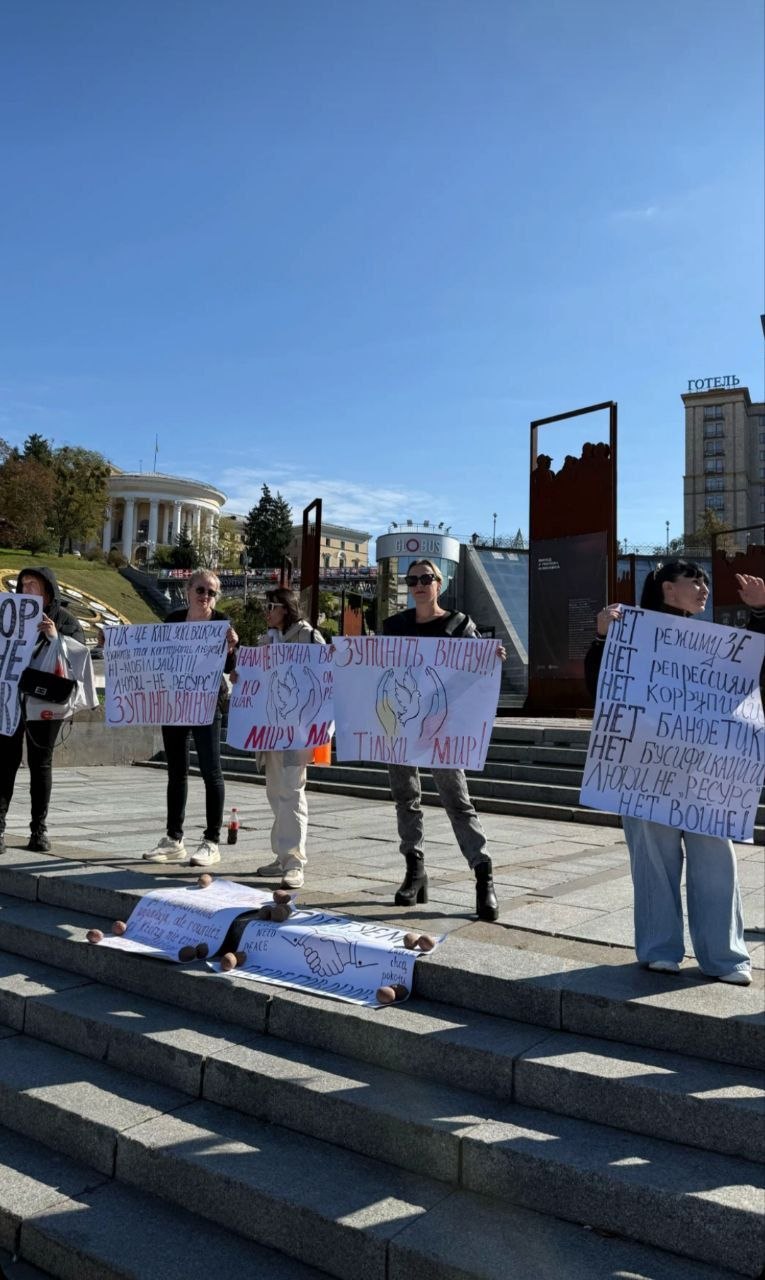
Peace rallies took place in Kyiv and, on a smaller scale, in several other cities. On the positive side, the events proceeded calmly, without obstacles or clashes.
On the negative side, only a few dozen men showed up in the capital, far from the thousands the organizers had hoped for. What went wrong?
What Happened
Yesterday's rally gathered a small group of people who took to the streets, held signs and loudly demanded peace. The organizers highlighted three core points they believe could form the basis of further dialogue:
- A referendum on cease‑fire conditions in Donbas.
- Strictly voluntary military service and mobilization.
- Open borders.
In practice, however, about twenty separate demands were raised, scattering participants' attention and creating additional grounds for disagreement.
Context
The first problem was the sheer number of demands. Two dozen items dilute focus and allow each supporter to back only a part of the program. Some back half the points, others support 19 out of 20, while the 20th is deemed fundamentally unacceptable. According to the organizers, demands should be concise, ideally no more than three.
The second issue was unrealistic expectations. Organizers first announced an expected 18 000 participants, then revised the figure to 3‑5 thousand. Without extensive media coverage, such numbers are objectively impossible. Branding the rally as “the last decisive chance” created motivation, but the impossibility of reaching the promised figures led to rapid disappointment.
The third problem was insufficient preparation, especially the lack of trust in the rally’s face. Todorov is a little‑known figure with a questionable past, and his replacements remain anonymous to the public. Even the support of a few military veterans, such as Vasyl Hunko, was not enough to craft a convincing image of integrity.
What Is Known Now
Despite the low turnout, the rally demonstrated that peaceful assemblies can be successfully organized in Ukraine without interference from security forces. It also suggested that, likely, no one – not even Russian intelligence services (FSB/GRU) – is backing the event; they may try to exploit any instability, as they do with protests worldwide.
The organizers announced plans to continue street actions until October 26, though it is unclear whether they will occur daily or only on weekends. They acknowledge that 18 thousand people will not gather today or next month, and they pledge to trim and clarify the demands, as well as to select respectable spokespersons.
Possible Consequences
If the movement can adjust its strategy, reduce the number of points and build trust in its leaders, it may attract a broader audience and become a significant factor in the public discourse on peace. However, without sustained and careful preparation, the risk of repeated low turnouts remains high, and the movement could stay marginal.