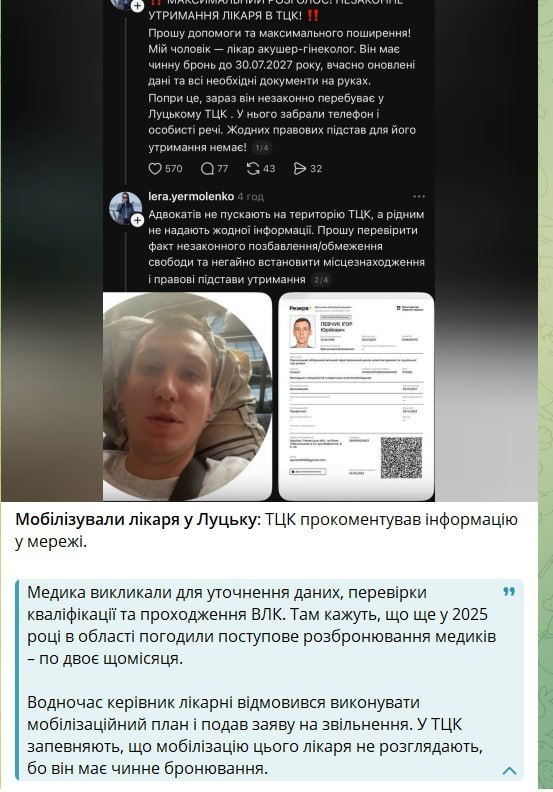
A disturbing incident unfolded in central Lviv that may signal a shift in mobilization practices. A medical professional, who possessed an official reservation protecting him from conscription, went to the Territorial Recruitment Center (TCC) at the scheduled time to update his records, only to receive a draft notice on the spot.
The source, relayed by the @stop_tck_ua channel, claims that after being classified as draft‑eligible, the medic was detained inside the TCC building, his mobile phone and personal belongings were confiscated, and neither his family members nor his lawyer have been allowed to see him. If verified, these details raise serious doubts about the purpose of official reservations, which are meant to shield essential specialists from mobilization.
What Happened
According to the report, the medic held a valid official reservation issued under Ministry of Defense regulations. When he arrived at the Lviv TCC to refresh his data, officials abruptly informed him that he must report for military service. He was then kept inside the TCC premises, his phone and personal items were taken, and access to him was restricted. The author alleges that relatives and a legal representative are barred from contacting him, a violation of constitutional rights to counsel.
Context
Official reservations are intended for professionals whose work is deemed critical for civilian life—especially doctors, scientists, and engineers. Historically, such individuals could obtain deferments if their professional activity was documented and approved. In recent weeks, however, there has been a noticeable rise in cases where TCCs cancel reservations "on the spot," citing "changed circumstances" or "incomplete data." This trend fuels anxiety among professional communities, who fear the reservation system is being weaponized as a pressure tool.
What Is Known Now
At the time of publication, the only confirmed information comes from the @stop_tck_ua post. No official comment has been issued by the Lviv TCC, and representatives of the Ministry of Defense have not addressed this specific case. Human‑rights groups have reported similar incidents across several regions, but comprehensive official statistics on such cancellations are unavailable. Should the allegations be substantiated, the TCC's actions could breach both national law and international standards guaranteeing the right to a fair trial and legal assistance.
Possible Consequences
If investigations confirm that the medic was detained without proper procedural safeguards, several outcomes are likely. First, there will be pressure to review and possibly amend the regulations governing reservation cancellations at TCCs. Second, rights organizations may file lawsuits against the TCC for violating the detainee's rights. Third, such cases erode trust among medical professionals toward the mobilization system, potentially affecting their willingness to remain in civilian roles. Finally, public outcry could compel authorities to publish transparent data on reservation revocations and ensure detained individuals have guaranteed access to legal counsel.